Guides
Deck and patio marketing: channels, rules and metrics
Deck and patio marketing: which channels and review platforms to use, what the FTC and Google require, and the metrics to track by source.
What to take away
- Market the jobs your crew builds well and prices correctly, not every job the phone brings in.
- A deck lead is qualified when the address, the deck type, the access and the rough budget are known before an estimator drives out.
- Permit timelines set your advertising calendar. Promote a service you cannot permit in the current season and you buy complaints.
- Reviews follow the FTC's ruleask every completed customer, never gate the request, never pay for a rating.
- Track cost per booked job by source, not clicks, and compare it with the contribution each job type actually leaves.
This article covers deck and patio marketing and the business decisions behind it. It is not structural, engineering, building-code, permit or legal advice. Footing depth, beam spans, guardrail loads and ledger attachment are set by the applicable building code and your local building department, and a licensed structural engineer or the permit office decides them for your site.
Start with the jobs you build well
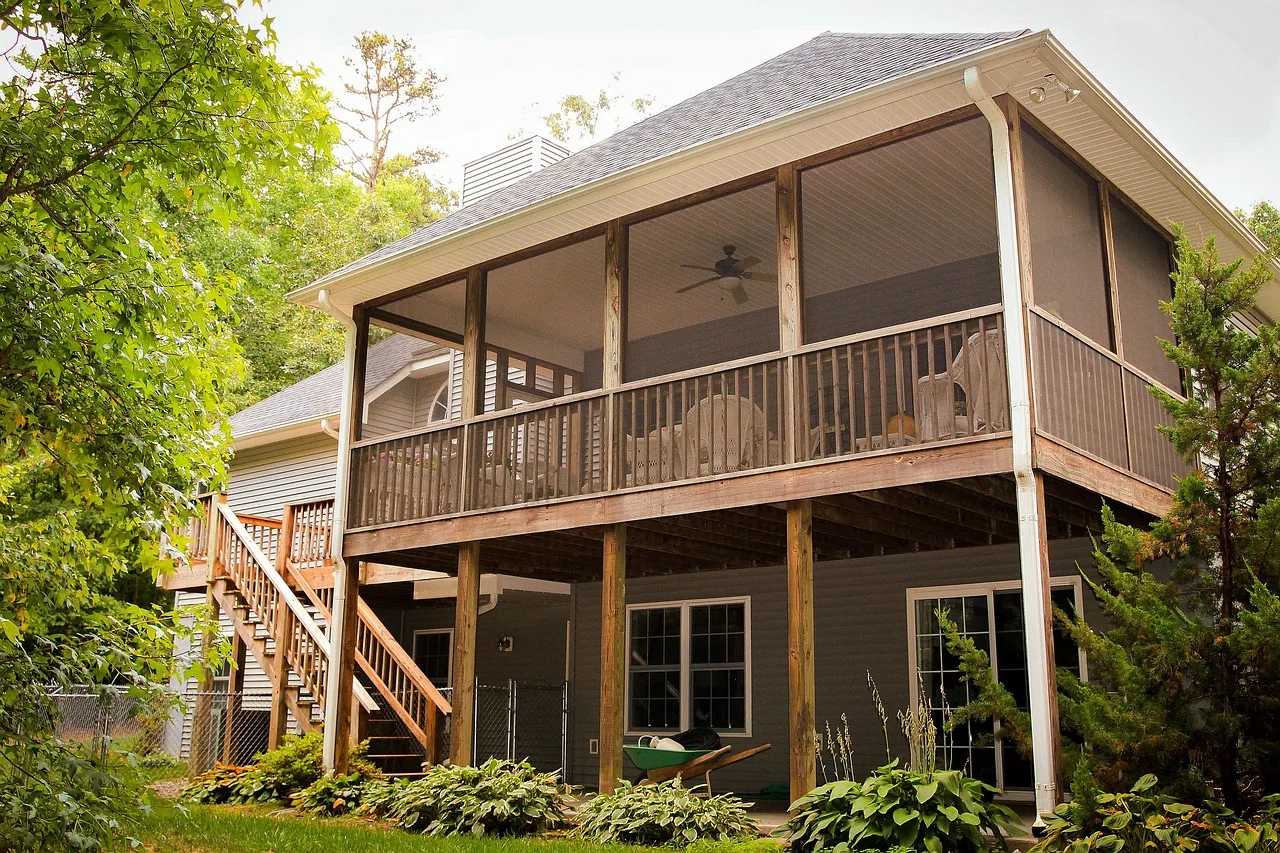
A deck contractor's marketing position is a build list, not a slogan. Pressure-treated platform with a ground-level patio. Cedar or composite deck with aluminum railing. Second-storey walkout over a grade-level patio. Each one carries its own crew skill, permit path and margin.
Write down what you decline. Rooftop decks over occupied space, structural repairs to someone else's framing, hot tubs on an existing deck, anything inside a conservation authority boundary. Declining in writing saves the estimator a site visit and saves the office an awkward call.
The estimator is the first marketing asset. A person who can read a backyard from the driveway and say "that is a walkout with a stair landing and a permit" qualifies better than any landing page.
The workflow your marketing has to match
Every stage below is a place a lead can stall, and each stall has a cost you can measure.
| Stage | Who owns it | What marketing must not promise |
|---|---|---|
| Inquiry | Office or owner | A price before the site visit |
| Site visit | Estimator | A start date before permit |
| Measurement | Crew lead | A design before the survey |
| Design handoff | Designer or owner | Changes after contract signing |
| Permit | Owner or permit runner | A build date the municipality has not confirmed |
| Procurement | Owner or purchaser | A material lead time nobody checked |
| Demolition and foundation | Crew lead | A one-week tear-out |
| Framing and decking | Carpenters | A finish date in a wet spring |
| Railing and inspection | Crew lead | That inspection passes first time |
| Punch list and warranty | Owner | That the last ten percent is quick |
If your ads promise a two-week build and your permit desk runs three weeks in June, the ad is the complaint.
Service pages that answer a real question
One page per build type beats one page per town. A composite deck page should say what the material is, how it handles freeze-thaw, what the railing options are, and how long the job usually takes from signed contract to final inspection.
A patio page should cover base preparation, drainage away from the foundation, and what happens to the lawn. Patio drainage rules differ by municipality, so name the authority and let the reader confirm with their permit office.
Do not write a page for every suburb. Ten thin pages rank worse than three that answer the question, and they make the site harder to maintain when a service changes.
Where to spend: the channels
A deck contractor's budget usually splits four ways. Search, where Google Local Services Ads and standard search ads catch the homeowner already looking for a deck builder. The lead marketplaces — Angi, Thumbtack and similar services — sell the same inquiry to more than one contractor. The visual platforms, Houzz, Yelp, Facebook, Instagram and Nextdoor, reward finished-project photos and neighborhood proof. Directories and trust listings, including the Better Business Bureau, are what a homeowner checks after a referral, not a volume channel. Give each channel its own landing page, a tracked phone number and a line in the spreadsheet before you add the next one.
Where the rules come from
Google's local results rest on relevance, distance and prominence, and Google's own guidance recommends complete business information, current hours, reviews and photos. Keep the profile accurate before spending on anything else.
The FTC's Advertising FAQs: A Guide for Small Business sets the standard for claims. "Best deck builder in the region" needs support. "Twenty years building cedar decks in this city" needs only to be true.
The FTC's Soliciting and Paying for Online Reviews: A Guide for Marketers governs review requests. Ask every completed customer, do not screen for the happy ones, and never offer a discount for a rating.
Permits are local. Your city or county building department applies the International Residential Code, published by the International Code Council, with state and local amendments, and issues the permit and the inspections. Many states also license or register contractors, so check your state licensing board or contractor registry before you advertise deck or patio work, and put your registration number on the quote and in the website footer.
Reviews, referrals and the punch list
Send the review request the day the punch list closes, not the day the decking goes down. Point it at the profile homeowners actually check: your Google Business Profile first, then Yelp, Houzz, Angi or the Better Business Bureau. The customer is looking at a finished job and the crew is still on site to fix anything small.
Referrals from landscapers, fence installers and realtors convert well because the referrer has already seen the yard. Define the handoff: who measures, who quotes, who carries the warranty, and whether a referral fee is paid. If a fee is paid, the relationship has to be disclosed where it could affect credibility.
Track referral contribution by source. A landscaper sending two jobs a season is a relationship. One sending ten is a channel that needs a written agreement.
Price, capacity and the promotion calendar
Promote only what the schedule can absorb. A crew of four carpenters has a weekly output, and advertising past it buys overtime, late jobs and callbacks.
Run the arithmetic in your own numbers:
- Weekly crew capacity in build days = crew size x days worked x utilization
- Build days per job = your average for that deck type
- Jobs you can start per week = weekly capacity / build days per job
- Leads needed = jobs you can start / your close rate
If leads needed is higher than your current inquiry volume, buy more. If it is lower, fix close rate or price before spending another dollar.
Track four numbers every week: cost per lead by source, cost per booked job by source, average job value for each build type, and close rate by estimator. A field-service CRM such as Jobber or Housecall Pro holds the job data, and a call-tracking service such as CallRail gives each channel its own number so leads are credited to the right source. Cost per booked job is the only figure that compares a marketplace lead with a referral.
Seasonality is real across the northern United States. Frost heave claims and freeze-thaw callbacks arrive in spring, so spring advertising should push inspections and repairs alongside new builds. Regional hail and wind swings and salt air on the coasts change fastener and finish choices, and those are page topics, not ad copy.
Common questions
How many leads should a deck company get before hiring?
Work backwards from crew capacity. If four carpenters can start one deck a week and you close one in three quotes, you need three qualified quotes a week. Hire when the backlog covers the new person's first month, not when inquiries spike for two weeks.
Should I advertise on Google or rely on referrals?
Both, but they do different jobs. Referrals fill the calendar with pre-qualified work. Search and Local Services Ads fill the gaps and let you test new service pages. Measure cost per booked job for each before shifting budget.
What should a deck quote include?
Scope, materials with brand and grade, railing type, and permit responsibility. Exclusions, payment schedule, and a start window rather than a fixed date. State that changes after signing are priced separately. Have a lawyer review the contract terms that apply in your state.
How do I handle a bad review?
Reply once, factually, without customer details. Say what you did to resolve it and offer a direct contact. Never argue the technical merits in public, and never ask staff or family to post counter-reviews.