Guides
Winter weather delay clause deck contract: measurable triggers
A winter weather delay clause deck contract sets measurable triggers, documents lost days, and explains schedule changes under U.S. state and local rules.
What to take away
- The core of a winter weather delay clause deck contract is measurable triggers: temperature, snow depth, wind speed, and lost days.
- Anything written as "weather permitting" or "unusually severe weather" rules out nothing and will not survive a payment dispute.
- A weather clause cannot move a U.S. construction-lien deadline. Those deadlines depend on state law; the linked Canadian provincial lien-period overview is not U.S. authority.
- The workaround stops being worth it once lost days exceed roughly 10 to 15 percent of the scheduled build window.
- Treat the sample temperature, snow, and wind figures below as illustrative, not as universal safety or product limits. Follow the installation instructions for the products used.
The constraint in measurable units
A U.S. deck season varies widely by region. Frost, snow, rain, and heat affect when crews can place footings, assemble framing, or apply finishes. Draft around conditions at the project site rather than assuming one calendar works everywhere.
Measurable weather triggers
- -10 Cforecast high stops work
- 150 mmsnow depth stops work
- 40 km/hsustained wind stops work
- 7 a.m.daily log reading time
Use numbers as illustrative contract triggers, not as universal safety or product limits. For example, the parties could define a weather day as one when the forecast high at the site is below -10 C, snow depth on the site exceeds 150 mm, or sustained wind exceeds 40 km/h. These sample values are metric; state the units expressly and use one system consistently. Adjust the values to the project and the products being installed, following the manufacturers' application instructions. A wording like "unsuitable weather" gives neither side an objective test.
Track the trigger with dated entries. A daily site log showing temperature at 7 a.m., snow depth, and hours lost turns the clause into evidence. Without the log, a contractor claiming 14 lost days has a claim, not a record.
A delay clause without a measurement is an argument waiting for a lawyer. A delay clause with a measurement is a schedule change.
What the clause rules out
A weather delay clause does not itself extend a construction-lien deadline. For private deck projects in the United States, lien rights and deadlines are state-specific, not governed by one nationwide deadline. For example, Florida's Construction Lien Law applies to qualifying Florida projects; it is not a rule for work elsewhere. Confirm the applicable state law and filing dates with a construction lawyer. A weather clause also does not change a permit's expiration terms; check the permit and the building department that issued it. The deck permit and inspection checklist can help with permit steps.
What the clause does not cover
Weather delay clause
- Lien periods
- No pause
- Finished work
- Delay excused
- Completion date
- Extends by logged days
Not covered
- Lien periods
- Fixed calendar days
- Finished work
- Damage not excused
- Completion date
- Fixed date contradicts
It also does not excuse a contractor from protecting finished work. If framing sits uncovered through a freeze-thaw cycle, the clause covering the delay does not cover the damage. That distinction belongs in the same paragraph, or the two issues get argued together.
If a contract promises completion by November 15 in a location where winter conditions may affect work, the weather clause and fixed completion date need a clear relationship. State whether logged weather days extend that date, or choose one.
What still works in a shortened season
Scheduling around local frost dates is the first lever. Contractors who book footing work after the ground thaws and reserve late-season slots for railings and finishing can keep more of the season usable. The Canadian deck-season guide is a regional example, not a U.S. calendar.
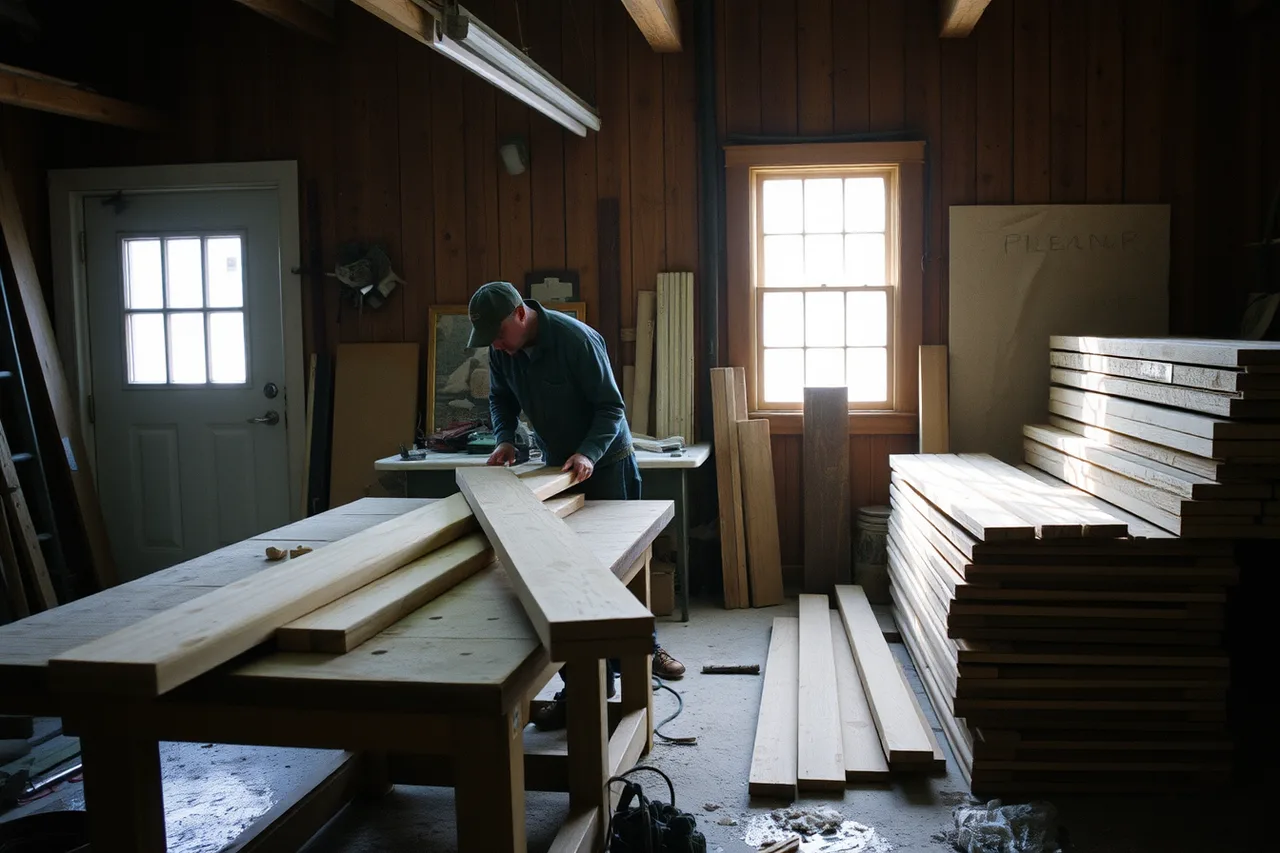
Prefabrication is the second. Cutting and pre-finishing components in a heated shop moves hours out of the cold. The site work that remains is assembly, which tolerates lower temperatures than coating does.
A staged payment schedule is the third. Tying draws to completed stages rather than calendar dates means a two-week snow delay shifts the money with the work instead of creating a default. The deck and patio quote template with pricing examples shows how staged draws read on a client-facing document.
Example clause with measurable triggers
Illustrative wording only; adapt the thresholds and terms to the project, applicable state law, permit terms, and product instructions.
- Define the weather dayany day the forecast high at the site is below -10 C, or snow depth exceeds 150 mm, or sustained wind exceeds 40 km/h.
- Require a dated daily log recording temperature at 7 a.m., snow depth, wind, and hours lost.
- State that logged weather days extend the completion date by the same number of days, with no penalty to either party.
- Cap the extension at 20 percent of the scheduled build window, after which either party may terminate and settle for work completed.
- State separately that the clause does not itself extend state construction-lien deadlines or change the permit's expiration terms; verify both for the project location.
Clause that holds up
- Temperature threshold written as a number
- Snow depth threshold written as a number
- Daily log required and its format named
- Extension cap stated as a percentage
- Lien and permit deadlines carved out
The compromises that are not worth it
The first bad compromise is a verbal understanding. A handshake that the crew will "make it up in spring" leaves the deposit, the schedule, and the lien exposure unresolved. Put it in the contract or drop it.
The second clause shifts all weather risk to the homeowner while the contractor keeps a fixed price and a fixed date. That combination reads as one-sided.
Quebec's Consumer Protection Act and Charter of the French Language are Quebec-specific and do not supply the rules for a U.S. project. U.S. consumer-contract requirements vary by state, so check the rules where the project is located; the Quebec consumer-contract discussion is a Canadian example, not a U.S. template.
Avoid copying a generic force majeure template without checking it against the law and project requirements in the state where the job is located. Generic language may not address frozen ground or state-specific lien deadlines. State the weather triggers and schedule effect directly rather than relying on a broad label. The general concept is described on the force majeure definition page.
When to stop drafting and do it properly
The threshold is arithmetic: add logged lost days and divide by the scheduled build window.
Lost days vs build window
Logged lost days divided by scheduled build window
Below 10% -> absorb delay, adjust schedule verbally
10 to 15% -> apply clause, issue written change order
The same threshold applies to drafting. If your contract is a downloaded template with a weather paragraph you have never tested against a real dispute, stop editing it yourself. A construction lawyer in the state where the project is located can review the clause, the lien carve-out, and the payment schedule in one pass.
Delays push work into colder, darker, shorter days. Applicable fall-protection requirements apply to icy deck framing, which carries different risks than work in July.
For U.S. projects, follow applicable federal Occupational Safety and Health Administration (OSHA) requirements or the requirements of the OSHA-approved State Plan authority, as applicable. Revise the safety plan if the schedule compresses into November.