Guides
What a serious deck and patio equipment checklist covers, 2027 edition
A deck and patio equipment checklist ties each purchase to the work you have sold, the access you can reach, and the crew training matrix you can sustain.
What to take away
- A deck and patio equipment checklist starts with the work you have sold, not with a tool catalogue: footing and framing work, decking and railing installs, and patio surface work each demand different access and handling.
- Residential deck work sits under OSHA's fall-protection guidance for residential construction. The employer carries the duty, and state-plan states may add requirements.
- Buy, rent, or subcontract turns on how often you need the machine, how fast you can get it on site, and what it costs you when it breaks mid-job.
- Every asset needs a named user, a condition record, and a repair-or-retire rule. Without those three, the checklist is paperwork.
- Keep purchase, payroll, and asset records that show income and expense clearly. The IRS recordkeeping page lists what to retain and for how long.
This article covers general deck and patio contracting practice. It does not cover structural, engineering, building-code, or permit advice. It also does not cover fall-protection, tax, or legal advice. Requirements vary by jurisdiction, site, design, loads, and height. Confirm them with your local authority having jurisdiction and qualified professionals.
Start from the work, not the wish list
A deck and patio contractor sells four kinds of work: footings and framing, decking and railing, patio and hardscape surfaces, and repairs. Each one pulls a different set of equipment behind it.
Framing on a sloped lot needs excavation access and material handling. A second-storey deck needs fall protection and a way to get long boards up. A paver patio needs compaction and screeding tools, and a way to move pallets to the back yard without crossing a finished lawn.
Write the capability list from accepted jobs, not from what a supplier is promoting this quarter. If you have never sold a job that needs a machine, you do not need the machine.
Equipment by work type
Named kit per job type:
Machines
- Footings and framing
- Compact excavator, 1.5 to 3.5 ton class; skid steer with auger and forks; concrete mixer
- Decking and railing
- Panel hoist; pump-jack scaffold; ladder with stabilizer; harness and anchor
- Patio and hardscape
- Plate compactor; jumping-jack tamper; masonry wet saw; skid steer with forks
- Repairs and inspections
- Ladder; harness; moisture meter; inspection camera
Hand and power tools
- Footings and framing
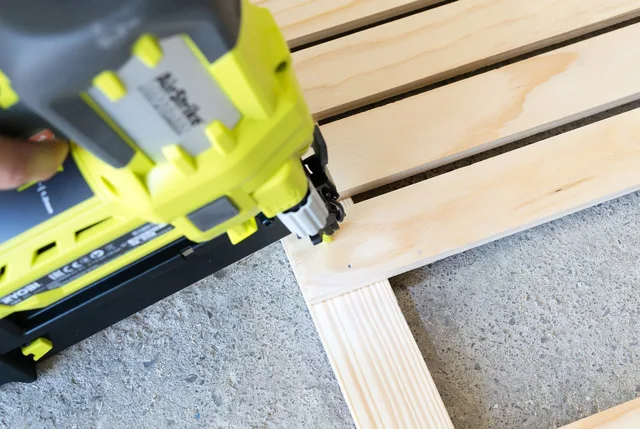
- Rotary laser; batter boards and string line; one-man auger; framing nailer; circular and reciprocating saw; rebar bender
- Decking and railing
- Sliding compound miter saw; impact driver; hidden-fastener bits; biscuit joiner
- Patio and hardscape
- Rubber mallet; screed board and rails; paver splitter; string line and stakes; wheelbarrow
- Repairs and inspections
- Oscillating multi-tool; reciprocating saw; pry bar and cat's paw; random-orbit sander; pump sprayer
The minimum owned kit on day one
A new owner does not need a machine yard. The day-one kit covers measurement, cutting, fastening, and personal protection.
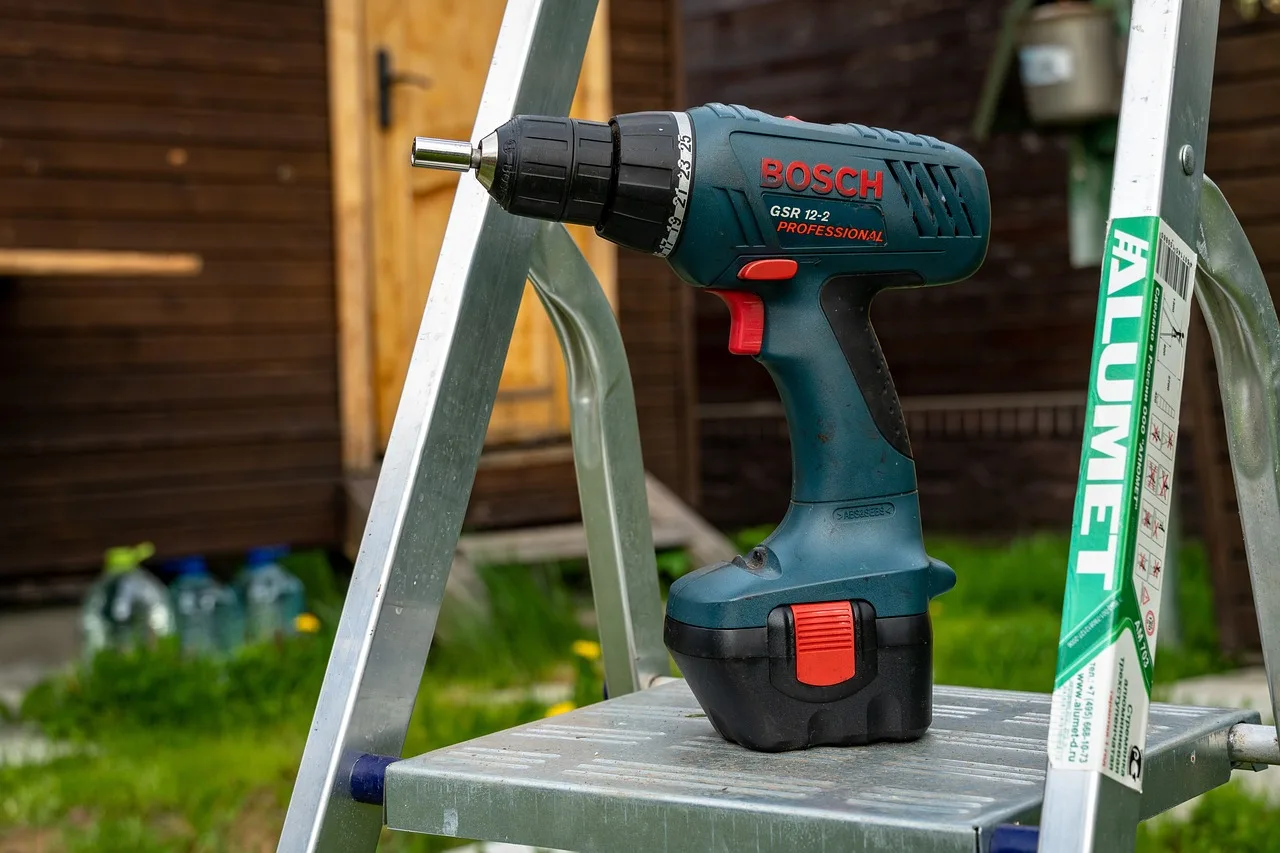
- Cordless drill and impact driver, two batteries, charger.
- 7-1/4 in circular saw and a 10 in or 12 in sliding miter saw.
- Reciprocating saw and an oscillating multi-tool.
- 25 ft tape, 2 ft and 4 ft levels, chalk line, speed square.
- Self-leveling cross-line laser and tripod.
- Harness, lanyard, rope grab, extension ladder, step ladder.
- Compressor, hoses, two nailers, or cordless equivalents.
- Wheelbarrow, shovels, pry bars, hammers, caulk gun, wet/dry vacuum.
- Safety glasses, gloves, hearing protection, hard hats, first-aid kit.
- Truck or trailer with ramps and tie-downs.
A typical retail range for that kit is $3,000 to $8,000. That is a range, not a quote.
Add a used compact excavator or skid steer and the first-year figure commonly lands between $25,000 and $60,000, depending on machine hours, year, and attachments.
The checklist, in the order decisions actually arrive
- List the capabilities your sold work requiresmeasurement, access, handling, production, communication, and documentation.
- Sort each capability into owned, rented, or subcontracted, using frequency and urgency rather than sticker price.
- Record the limits before you commitcapacity, dimensions, power supply, attachments, and operator requirements.
- Set inspection points: on arrival, before each use, on return, and after any damage.
- Track custodywho has it, where it is, what condition it left in, and what accessories went with it.
- Name who is authorized to operate, configure, transport, or approve each asset, and how that competence gets renewed.
- Pilot the tool on one representative job before you standardize across the crew.
- Set a repair-or-retire rule using downtime, repair frequency, parts availability, and total cost.
Use this as a decision aid for your deck and patio equipment planning, not as a universal ranking.
Deck and Patio Equipment Checklist
- List required capabilities for accepted work
- Separate owned, rented, subcontracted capacity
- Specify compatibility and limits before purchase
- Control inspection and readiness checks
- Track custody and condition of assets
- Train and authorize competent users
- Test before standardizing across fleet
- Set repair and replacement rules
Fall protection on residential deck work
Deck building is residential construction. The federal standard is 29 CFR 1926 Subpart M, and OSHA directive STD 03-11-002 covers fall protection in residential construction. OSHA publishes separate fall protection guidance for residential construction. Read it before you set a crew policy.
The guidance describes conventional fall protection methods and makes one thing clear: the employer is responsible for meeting the applicable federal or state-plan requirements, and for the site-specific controls those requirements demand. It does not hand you a single method that fits every deck.
That means your checklist has to name the person who decides the fall-protection setup for each job, and the person who verifies it before work starts. It also means equipment purchases for elevated work follow from that decision, not the other way around.
Do not treat a supplier's product claim as a compliance answer.
Training matrix and inspection log
Two short records turn the named-user rule into something you can audit. The first is a training matrix.
| Task | Named competency | Sign-off | Renewal |
|---|---|---|---|
| Compact excavator | Supervised digging, trenching, loading | Owner | Every 3 years |
| Fall protection | Harness fit, anchor selection, rescue plan | Safety lead | Annually |
| Plate compactor | Start, stop, fuel handling, paver edges | Foreman | Every 2 years |
| Wet saw | Blade change, water feed, dust control | Foreman | Every 2 years |
The second is an inspection log, filled at arrival, before each use, and on return.
| Date | Asset | Check | Finding | Action | Initials |
|---|---|---|---|---|---|
| 04/12 | Mini excavator 2 ton | Pre-use | Hydraulic seep at left track | Tag out, call dealer | J.M. |
| 04/12 | Plate compactor | Return | Belt guard loose | Guard replaced | R.T. |
This log shows condition history, who held each asset, and when a repair-or-retire call was made.
The cost test before you buy or rent
OSHA's safety management guidance recommends a proactive program that finds and fixes hazards before an injury or an inspection exposes them. For an equipment checklist, that translates into one question: does this purchase remove a hazard or add one?
Run the comparison in your own numbers. Let F be how often you need the machine per year. Let D be the days you would rent it each time. Let R be the daily rental rate. Let P be the purchase price plus annual maintenance, storage, and insurance.
Buy when F x D x R clears P over the years you expect to keep it, and when you can keep the machine busy enough to justify the storage.
Subcontracting wins when the work is occasional, the operator skill is specialized, or the machine would sit idle most of the year. It loses when you cannot control the schedule on a job that depends on it.
What records to keep and how to version the checklist
The IRS recordkeeping guidance lets you choose any system that clearly shows income and expenses, as long as you keep the documents that support purchases, sales, payroll, and assets. For a deck contractor, that means equipment invoices, maintenance logs, and warranty paperwork live in the same place as job files.
Put an effective date on your working checklist. Mark the approved version. Keep superseded copies out of the truck binder so nobody follows an old rule.
Worked example: renting vs buying a mini excavator
A two-crew deck company pays $325 a day to rent a 2 ton mini excavator for footing digs. It sold 22 footing jobs last year and used the machine two days on each. That is 44 rental days, or about $14,300 for the year.
A used 2 ton machine sells for about $35,000. Maintenance, storage, and insurance add roughly $2,500 a year. Three years of running costs bring the purchase route to about $42,500. Three years of rental comes to about $42,900, so the crossover sits in year three.
At eight footing jobs a year the rental bill is about $5,200, and the machine would sit idle most of the year. Renting stays cheaper.
Rates and machine prices vary by market.
Common questions
Does this checklist replace a safety program?
No. It organizes equipment decisions. Fall protection, hazard assessment, and training requirements come from your OHS regulator and the applicable OSHA or state-plan rules.
How do I decide between buying and renting?
Run the cost test with your own numbers. If the machine would sit idle for most of the year, rent or subcontract.
What records should I keep for equipment?
Keep purchase invoices, maintenance and repair logs, warranty documents, and proof of who operated each machine. The IRS recordkeeping page describes the categories to retain and how long to hold them.
When should a tool be retired?
Set the rule before the tool fails: retire it when repair frequency, downtime, or parts availability makes it cost more to keep than to replace. Write the rule down and give one person the authority to apply it.